

Description
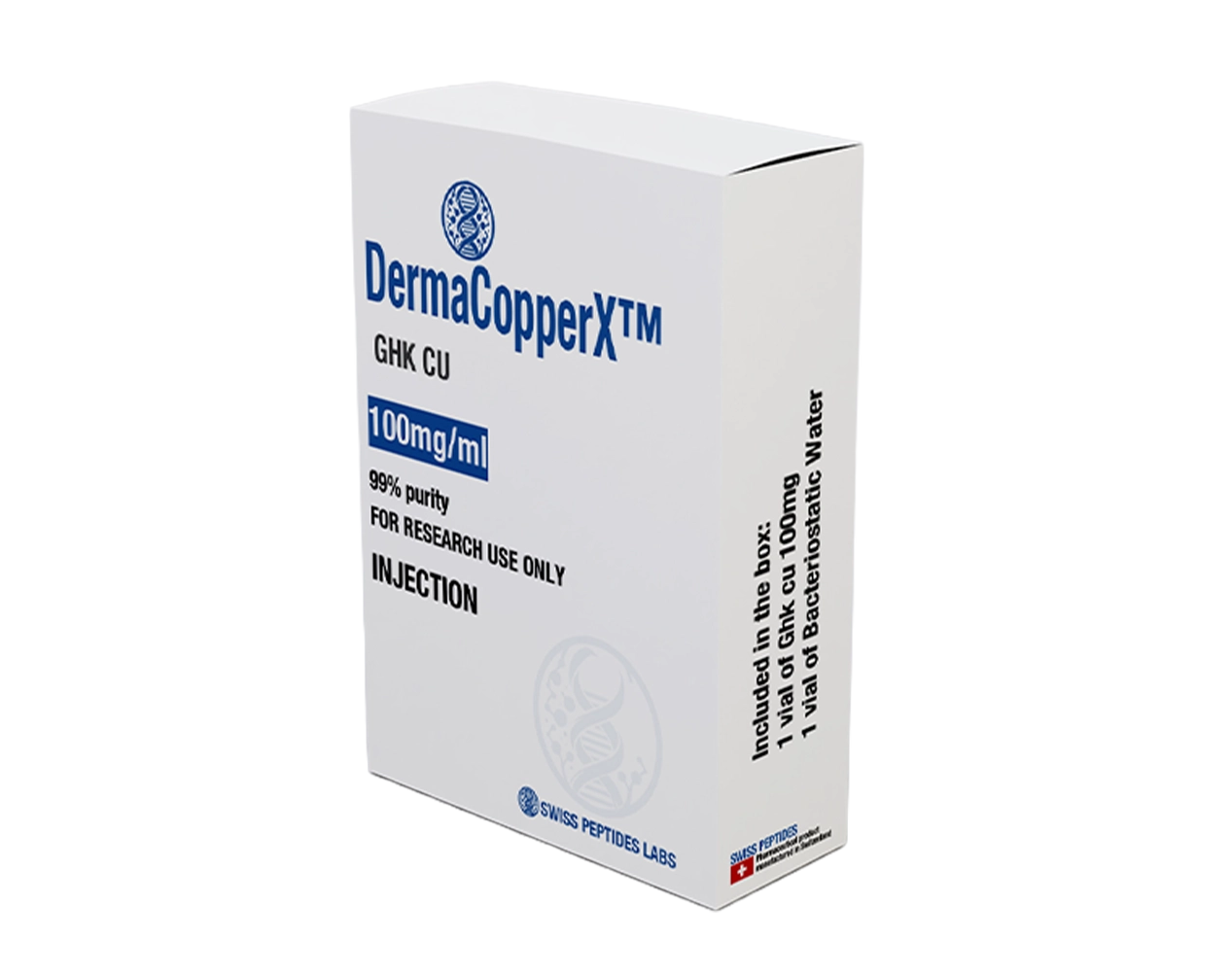
DermaCopperX™ GHK-Cu is a high-purity synthetic form of the naturally occurring copper tripeptide that plays a critical role in cellular repair and tissue remodeling processes. By binding copper ions, GHK-Cu influences multiple biological pathways associated with collagen production, angiogenesis, and anti-inflammatory signaling. It is widely studied in skin biology, wound healing, and regenerative medicine research. The 100mg/mL presentation is designed for precision-based laboratory and experimental protocols.
Benefits
-
Stimulates collagen and elastin synthesis pathways
-
Supports tissue regeneration and cellular remodeling
-
Promotes angiogenesis and vascular repair mechanisms
-
Modulates inflammatory signaling pathways
-
Enhances wound healing research models
-
Supports skin structure and dermal matrix integrity
-
Influences gene expression related to tissue repair
-
Studied in hair follicle and scalp biology research
-
Protects cells against oxidative stress
-
Enhances extracellular matrix formation studies
Scientific Areas of Study
Skin Regeneration and Repair:
GHK-Cu is extensively studied for its role in improving dermal structure, collagen deposition, and accelerated wound closure in skin models.
Angiogenesis and Vascular Biology:
Research explores its ability to promote new blood vessel formation and endothelial cell function.
Gene Expression Modulation:
Studies examine how GHK-Cu influences the activation of genes related to tissue repair, inflammation control, and cellular growth.
Anti-Inflammatory Pathways:
GHK-Cu is analyzed for its regulatory effects on pro-inflammatory cytokines and oxidative stress responses.
Hair and Scalp Biology:
It is frequently studied for its impact on hair follicle signaling and scalp tissue regeneration models.
Research Conclusion
DermaCopperX™ GHK-Cu in its 100mg/mL presentation represents a high-purity, research-grade peptide for advanced studies in dermatology, regenerative biology, and cellular repair. Its copper-binding properties allow researchers to investigate complex pathways of collagen synthesis, angiogenesis, and gene regulation associated with tissue remodeling. This compound is strictly intended for controlled laboratory research environments.

Reviews
There are no reviews yet.