

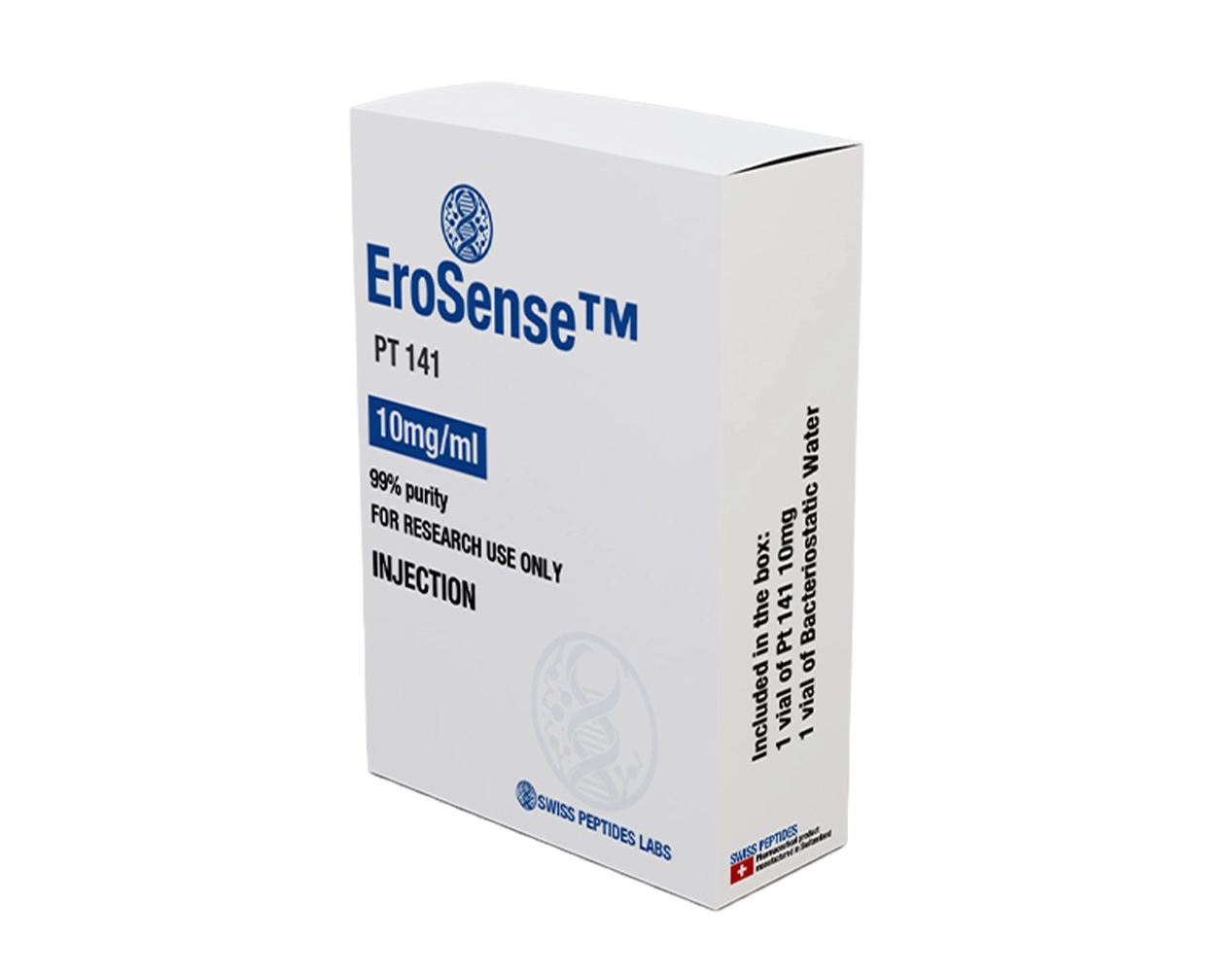
Description
EroSense™ PT-141 is a laboratory-grade synthetic peptide designed to support advanced research into central melanocortin signaling and neuroendocrine pathways related to sexual behavior and motivation. As an analog of α-MSH, PT-141 selectively activates melanocortin receptors in the brain rather than peripheral vascular systems. This allows researchers to study neural mechanisms of arousal, motivational drive, and hormone–brain interaction. The 10mg/mL presentation is optimized for controlled experimental and laboratory research protocols.
Benefits:
-
Activates central melanocortin receptor pathways
-
Supports research on sexual motivation and arousal signaling
-
Influences neuroendocrine communication mechanisms
-
Enhances understanding of brain–hormone interaction
-
Studied in behavioral and neurological research models
-
Modulates central nervous system signaling
-
Investigated in motivation and reward pathway studies
-
Supports non-vascular arousal mechanism research
-
Contributes to melanocortin system analysis
-
Enables advanced neurobiological research
Scientific Areas of Study
Central Melanocortin Signaling:
PT-141 is studied for its interaction with MC3R and MC4R receptors, allowing researchers to analyze how melanocortin pathways influence motivation and arousal at the neural level.
Neuroendocrine Regulation:
Research explores its effects on hormone-mediated communication between the brain and peripheral systems.
Behavioral and Motivation Models:
Studies focus on how PT-141 influences motivational drive and behavioral response in experimental models.
Sexual Function Research:
PT-141 is widely investigated in models examining central control of sexual arousal and desire.
Reward and Neural Pathways:
Investigations analyze its role in neural circuits associated with reward, attention, and stimulus response.
Research Conclusion
EroSense™ PT-141 in its 10mg/mL presentation represents a high-purity, research-grade peptide for advanced studies in neuroendocrinology, behavioral science, and melanocortin receptor biology. Its central mechanism of action allows researchers to explore neural pathways of motivation and arousal without relying on peripheral vascular effects. This compound is strictly intended for controlled laboratory research environments.


Reviews
There are no reviews yet.