

Description
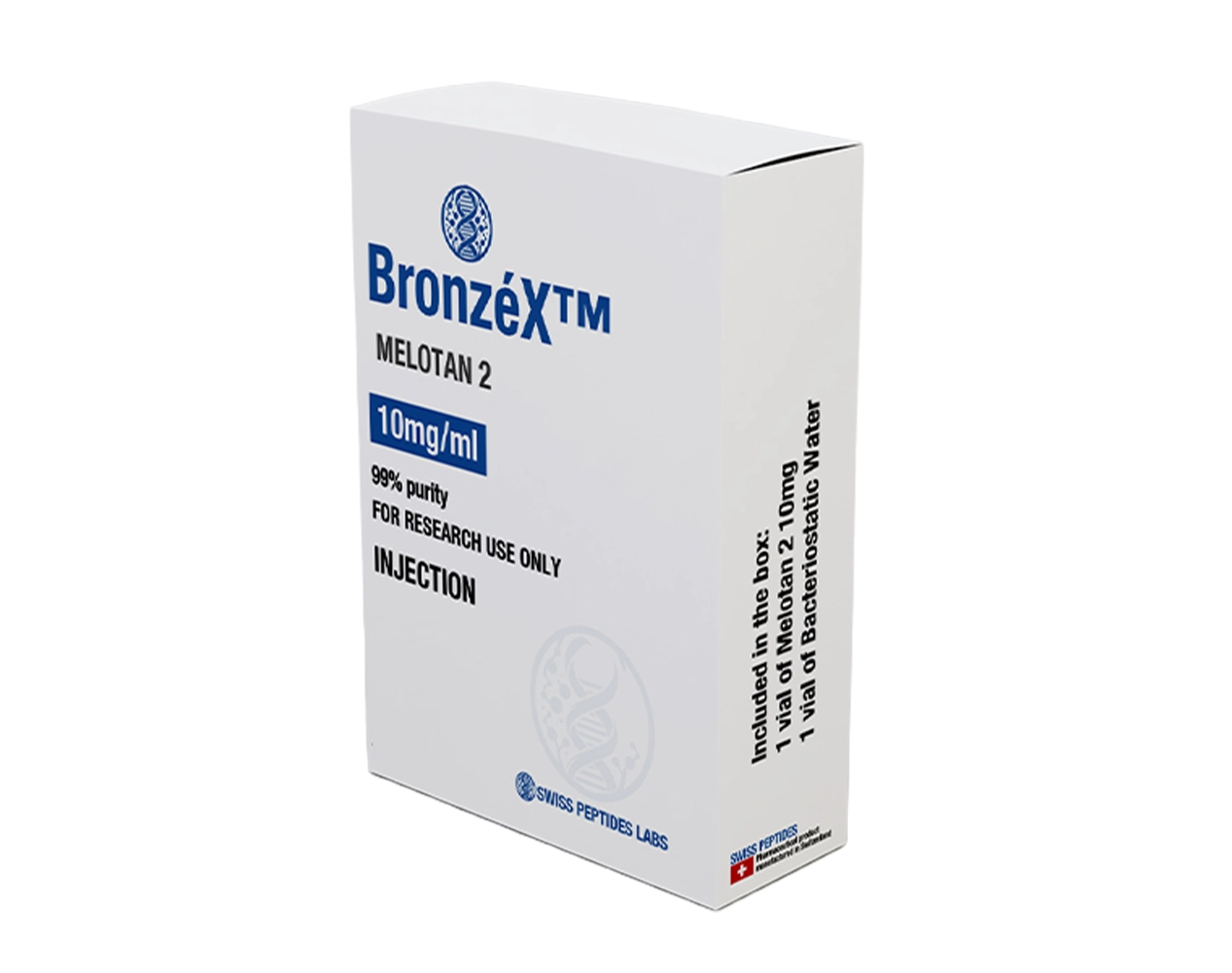
BronzéX™ Melanotan II is a laboratory-grade synthetic peptide designed to support advanced research in skin pigmentation and melanocyte signaling pathways. As an analog of α-MSH, it binds to melanocortin receptors to stimulate melanin production within melanocytes. This mechanism allows researchers to study the regulation of pigmentation, cellular response to ultraviolet exposure, and photoprotective signaling at a molecular level. The 10mg/mL presentation is optimized for controlled experimental and laboratory research protocols.
Benefits
-
Stimulates melanogenesis pathways in research models
-
Activates melanocortin receptors (MC1R signaling)
-
Supports studies on skin pigmentation regulation
-
Enhances research into photoprotection mechanisms
-
Influences melanocyte activity and cellular signaling
-
Investigated in UV-response and oxidative stress models
-
Supports research on hormonal control of pigmentation
-
Studied in dermatological and cosmetic science models
-
Contributes to understanding melanin synthesis pathways
-
Enables advanced skin biology research
Scientific Areas of Study
Melanocyte Biology:
Melanotan II is studied for its role in regulating melanocyte activity and melanin synthesis at the cellular and molecular level.
Photoprotection and UV Response:
Research explores how increased melanin production influences cellular defense mechanisms against ultraviolet radiation.
Hormonal Regulation of Pigmentation:
Studies analyze its interaction with melanocortin receptors and downstream signaling pathways controlling skin tone.
Oxidative Stress and Skin Health:
Investigations focus on its potential role in modulating oxidative stress responses in skin cells.
Cosmetic and Dermatological Research:
Melanotan II is commonly used in experimental models related to aesthetic science and pigmentation disorders.
Research Conclusion
BronzéX™ Melanotan II in its 10mg/mL presentation represents a high-purity, research-grade peptide for advanced studies in skin biology, pigmentation science, and melanocortin receptor signaling. Its mechanism of action enables researchers to investigate melanin synthesis, UV-response pathways, and cellular photoprotection. This product is strictly intended for controlled laboratory research environments.



Reviews
There are no reviews yet.